
Orpheum Theatre
203 S. Main Street,
Memphis,
TN
38103
203 S. Main Street,
Memphis,
TN
38103
 13 people
favorited this theater
13 people
favorited this theater
Related Websites
Orpheum Theatre - Memphis (Official)
Additional Info
Previously operated by: Malco Theatres Inc., Orpheum Circuit
Architects: Cornelius Ward Rapp, George W. Leslie Rapp
Firms: Rapp & Rapp
Functions: Concerts, Live Performances, Movies (Classic), Stage Shows
Styles: Italian Renaissance
Previous Names: RKO Orpheum Theatre, Malco Theatre
Phone Numbers:
Box Office:
901.525.7800
Nearby Theaters


News About This Theater
- Jul 16, 2014 — Orpheum salutes Shirley Temple
- Jun 7, 2013 — Orpheum summer series tracks evolution of cinema
- Jun 24, 2010 — Orpheum's summer series offers range of audience favorites

The Grand Opera House opened on the corner of Main Street and Beale Street in 1890, and was touted as the finest opera house outside New York at the time. Originally used for opera and plays, Col. John D. Hopkins continued the tradition beginning in 1899 and put his name on the theatre sign. The Grand Opera House soon was featuring vaudeville acts, and in 1907 became part of the Orpheum circuit. It was renamed the Orpheum Theatre that same year. In 1923, a fire broke out and the old Orpheum Theatre was burned to the ground. Luckily, the theatre was empty at the time but the largest crowd in its history gathered to watch. (The first Orpheum Theatre has its own page on Cinema Treasures.)
Five years later, on the site of the old theatre, a new Orpheum Theatre was built at a then-staggering cost of $1.5 million. Twice as large as the old theatre, and much more ornate and luxurious, decorated in the style of Francois I, the Memphis Orpheum Theatre was beyond anything the builders of the old opera house could have ever dreamed. It was the last and largest of the Memphis movie palaces.
The Orpheum Theatre opened on November 19, 1928 with Corinne Griffith in “Outcast” and acts of vaudeville on the stage. The auditorium, which originally seated 2,600, was decorated in shades of gold, red and cream, and included a huge stage, orchestra pit, three balconies(one originally a separate ‘colored’ balcony) and domed ceiling. The Orpheum Theatre also owns a Mighty Wurlitzer 3-manual 13 rank organ. The grand lobby was the most spacious in Memphis with its twin staircases, enormous crystal chandeliers and gilded plasterwork. During the 1930’s the Orpheum Theatre operated under several managements after the Orpheum circuit bowed out. Entertainments included black performers such as Jimmie Lunceford, films and the occasional girlie show. It challenged the Sunday Blue Laws by serving sandwiches in the lobby with a movie as a bonus and contributed to the laws being overturned.
On April 19, 1940, the Orpheum Theatre was purchased by the Malco(M.A. Lightman Co.) chain and switched to a movies-only format, renamed Malco Theatre. Special events continued to take place there, the organ was maintained and it became the place to see horror movies and Disney films. It survived a threat during the 1960’s of being replaced by an office building, happily during the run of “Goldfinger” when lines were around the block. Two stage shows played the Malco Theatre in 1972 and people began to see the theatre as a potential stage venue. The Malco Theatre was offered ‘For Sale’ on September 13, 1976 and continued top run first-run films until it closed later in 1976.
In 1977, the Memphis Development Foundation acquired the Orpheum Theatre and began booking a variety of events on stage and screen. In 1982-1983 a $5 million renovation project brought the palace back to its 1928 glory after decades of decline. The Orpheum Theatre now contains a patron lounge called the Broadway Club, created when the old commercial spaces on either side of the lobby were connected in the 1983 renovation.
In January 1984, a grand reopening ceremony was held. A second renovation in the early-1990’s expanded the stage so that the most complex touring shows could play there.
Today, the Orpheum Theatre is Memphis' premier venue for touring Broadway shows. The Orpheum Theatre has hosted more touring Broadway productions than any other theatre in the US. In addition to its stage shows, the Orpheum Theatre hosts concerts and everyone from the Vienna Boys Choir to Patti LaBelle to Harry Connick, Jr. have graced the stage. It is also the home to two of the city’s finest local arts organizations, the Memphis Ballet and the Memphis Opera. Classic movies are screened on a regular basis. The Orpheum Theatre was the cornerstone of the rebirth of Beale Street, and remains a busy, profitable landmark.
Contributed by
Bryan Krefft, Vincent Astor
 Want to be emailed when a new comment is posted about this theater?
Just login to your account and subscribe to this theater.
Recent comments (view all 37 comments)
Great photo David,The Loews State can be seen in the background also.
That is a very interesting photo of the Orpheum, have not seen that one before. Whatever is on the marquee has been carefully retouched out. Note Milton Slosser’s name on the reader board.
If you haven’t seen it already, the Memphis Orpheum is on both front and back covers of this quarter’s Marquee magazine from the Theatre Historical Society.
Here is a Historic Film Row link, related to the film vault photo I just added to the gallery.
https://historic-memphis.com/memphis-historic/filmrow/filmrow.html?fbclid=IwAR0Hx23JIvm8TcMlPThrj7jbyrRuC5ecaib7mjRs9y366jhSTctVqOC41ts
Grand opening ad posted
Reopened as Malco on April 19th, 1940. Grand opening ads posted.
Closed as Malco in 1976.
September 13th, 1976, for sale ad posted.
June 2021 article: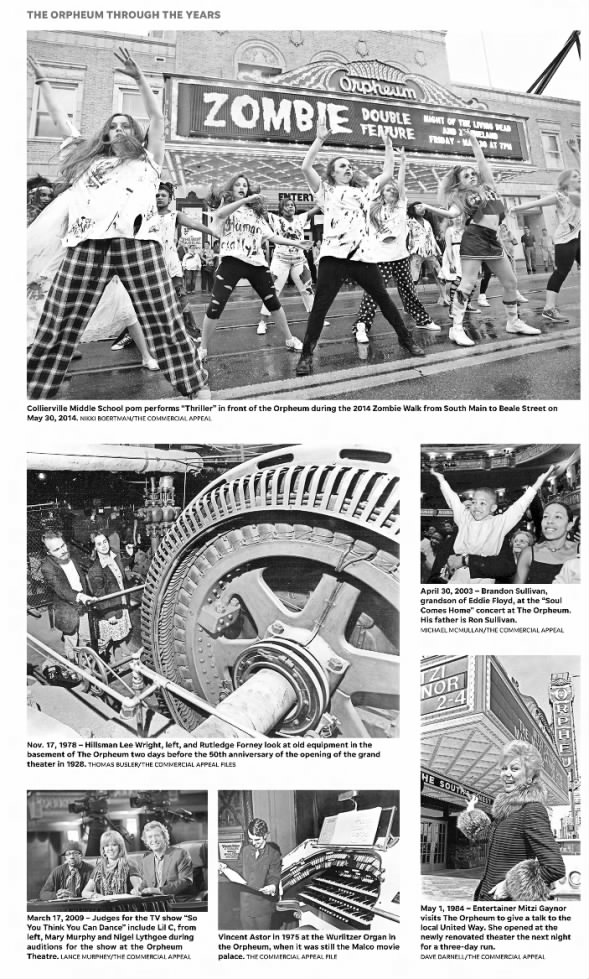 The Orpheum theatre history 06 Jun 2021, Sun The Commercial Appeal (Memphis, Tennessee) Newspapers.com
Seen briefly in an episode of the tv series Mysteries at the museum, mentioning that this theatre is supposed to be haunted by a ghost of a lady who killed after being hit by a tram outside this theatre!?