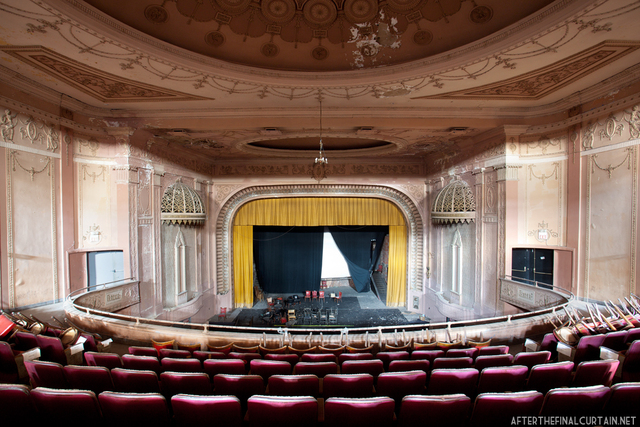
Madison Theatre

107 NE Madison Avenue,
Peoria, IL 61602

Unfavorite 7 people favorited this theater

Additional Info

Previously operated by: Balaban & Katz Corp., Publix Theaters Corporation

Architects: Frederic J. Klein

Styles: Italian Renaissance, Neo-Classical

Nearby Theaters

News About This Theater

Madison Theatre

Opened in 1920, for local businessman Dee Robinson, the Madison Theatre was designed by Frederic J. Klein. Klein also designed Rockford’s huge Coronado Theatre seven years later.

Designed with an Italian Renaissance exterior and Neo-Classical style interior, the Madison Theatre originally hosted both vaudeville acts and silent films, but switched to sound by the late-1920’s.

Robinson featured annual Christmas shows at the Madison Theatre for which children were admitted free of charge. After he died, the practice continued into the 1950’s.

The auditorium features a high domed ceiling with classical-inspired plasterwork decorating both the ceiling and side walls. The ceiling of the theatre’s lobby is also domed, and its facade features extensive terra-cotta work, with a triple-arched window over the marquee.

In 1980, the Madison Theatre was named to the National Register of Historic Places. The last major movie palace built in Peoria, the stunningly restored Madison Theatre continued to draw crowds as a venue for rock concerts and other live acts until it closed in 2003. New owners have said they may restore the building, but by 2010, nothing has happened. In February 2022 plans were announced that the Madison Theatre would be restored.

Contributed by Bryan Krefft

Recent comments (view all 40 comments)

bbollinger
bbollinger on September 14, 2015 at 12:53 am

I saw the house of wax in 3d back in 1953. Just bought it for tv but can’t get buttercup

DavidZornig
DavidZornig on July 13, 2016 at 7:47 pm

Seven images added to Photos Section courtesy of the Peoria Public Library.

pnelson
pnelson on July 13, 2016 at 10:36 pm

Elegant and lovely vintage theatre. Color choice was wonderful. Hope it is restored again and in use again too.

DavidZornig
DavidZornig on June 11, 2020 at 3:36 pm

Regarding photo posted by Mark 8/19/13, Per the Local History Collection : Peoria Public Library.

The Warner Brothers 1936 movie “Earthworm Tractors” had a worldwide premiere at the Madison Theater in downtown Peoria, Illinois on July 24th 1936. The movie was based upon the Caterpillar Track Type Tractor and Caterpillar employees who built and sold the tractors.

rso1000
rso1000 on June 25, 2021 at 9:50 pm

Re-opening update ! ! ! ! ! https://www.centralillinoisproud.com/news/top-stories/peorias-madison-theater-may-open-its-doors-again-after-nearly-two-decade-closure/?fbclid=IwAR045wpXAWB2OEn3Yl-nN-A-jz6RQ_0EVqryEtLNyySxaCu2aMKSSCfiwPk

PEORIA
PEORIA on February 7, 2022 at 12:45 am

JANUARY 2022 UPDATE JANUARY 2022 UPDATE JANUARY 2022 UPDATE

Exciting News, in case Anyone hasn’t already heard about It. * (See the Following Peoria News website Links) ….

https://www.pjstar.com/story/news/columns/nick-in-the-morning/2022/01/26/preservation-group-takes-control-peorias-historic-madison-theater/9212780002/

https://www.hoiabc.com/2022/01/27/madison-theatre-deck-become-new-hub-downtown-peoria-entertainment/

https://www.week.com/2022/01/27/group-looks-restore-peorias-madison-theatre-former-glory/

https://www.centralillinoisproud.com/news/local-news/madison-theatre-donated-to-preservation-association-by-owner/

Stay Tuned!

MSC77
MSC77 on November 20, 2023 at 7:40 pm

This venue’s 70mm presentations history is included in the recently-published article “70mm Presentations in Peoria: A Chronology of 70mm Large Format Exhibition, 1976-Present”.

Paul C
Paul C on June 12, 2026 at 10:35 pm

Here’s more regarding the 1936 world premiere of 𝘌𝘢𝘳𝘵𝘩𝘸𝘰𝘳𝘮 𝘛𝘳𝘢𝘤𝘵𝘰𝘳𝘴 at the Madison, and its personal appearance by rubber-faced leading man Joe E. Brown:

The slapstick comedy was based on stories by former Caterpillar mechanic William Hazlett Upson, with shooting locations that included Cat’s East Peoria assembly plant. The company also supplied tractors for use in the film.

What follows is from the Manhattan-based 𝘔𝘰𝘵𝘪𝘰𝘯 𝘗𝘪𝘤𝘵𝘶𝘳𝘦 𝘏𝘦𝘳𝘢𝘭𝘥, a weekly trade journal for the film industry, in an edition published a few weeks after the event.

“As Peoria is the home of the Caterpillar, around which the story of ‘Earthworm Tractor’ was written, good showmanship called for the premiere of the picture in that spot, the opening put over at the Madison Theatre in giant fashion under the wing of Len C. Worley, Great States [Theater Corp.] city manager, and E. G. Fitzgibbons, zone publicity director. Tractor company officials, newspapers and civic heads also came in on the campaign, topped by the personal appearance at the opening of Joe E. Brown.

“This event was of course made much of locally. Mayor [Edward Nelson Woodruff] proclaimed a Brown Day, streets were decorated and lighted, the festivities put on with all the premiere accessories, including lobby broadcast to introduce the celebrities. ‘Earthworm Black,’ new style color, was advertised by women’s stories in conjunction with the opening and many social gatherings duly publicised were held before and after the performance.

“Newspapers gave the star everything in the house, to judge from the tear sheets. In addition to the pages and pages of stories, interviews and art, autographed photos were given to those advertising on classified page and tickets to the opening offered for subscriptions. ‘Hyperbole’ contest for most exaggerated description of the star was also run for five days, paper carrying daily photos and two-column stories on the stunt. Co-op ‘welcome’ ads were numerous, especially five-column full taken by the tractor company.”

Paul C
Paul C on June 18, 2026 at 10:53 am

I posted a photo of a standee at the Madison Theatre promoting Fox’s 𝘛𝘩𝘦 𝘊𝘰𝘤𝘬-𝘌𝘺𝘦𝘥 𝘞𝘰𝘳𝘭𝘥, an early talkie that played an interesting role in censorship history. The image testifies, in its way, to community standards of flapper-era Peoria and beyond.

A back story follows, including why the image was so provocative.


𝙏𝙃𝙀 𝘾𝙊𝘾𝙆-𝙀𝙔𝙀𝘿 𝙒𝙊𝙍𝙇𝘿 premiered in the dying days of the Roaring ‘20s, at dusk for three overlapping eras. Its nationwide release occurred October 20, 1929, four days before Wall Street’s Black Friday heralded the Great Depression. In the film industry it arrived at the cusp of a technical revolution and a philosophical one: squarely amid the seismic transition from silent movies, and mere months before Hollywood adopted its self-censoring Hays Code.

Billed as an “An All Talking Mirthquake,” 𝘊𝘰𝘤𝘬-𝘌𝘺𝘦𝘥 𝘞𝘰𝘳𝘭𝘥 picked up the story from the silent smash 𝘞𝘩𝘢𝘵 𝘗𝘳𝘪𝘤𝘦 𝘎𝘭𝘰𝘳𝘺, 1926’s highest grossing picture. As such, the follow-up stands among Hollywood’s first feature-film sequels (but not, as sometimes reported, the very first).

Like its predecessor, 𝘊𝘰𝘤𝘬-𝘌𝘺𝘦𝘥 𝘞𝘰𝘳𝘭𝘥 tracked the misadventures of Jim Flagg and Harry Quirt, bawdy and bickering U.S. Marines who find trouble and romance – if romance is the word – in locations around the globe. An opening text quotes Rudyard Kipling’s “Tommy”:

𝘈𝘯' 𝘪𝘧 𝘴𝘰𝘮𝘦𝘵𝘪𝘮𝘦𝘴 𝘰𝘶𝘳 𝘤𝘰𝘯𝘥𝘶𝘤𝘬 𝘪𝘴𝘯'𝘵 𝘢𝘭𝘭 𝘺𝘰𝘶𝘳 𝘧𝘢𝘯𝘤𝘺 𝘱𝘢𝘪𝘯𝘵𝘴,
𝘞𝘩𝘺, 𝘴𝘪𝘯𝘨𝘭𝘦 𝘮𝘦𝘯 𝘪𝘯 𝘣𝘢𝘳𝘳𝘪𝘤𝘬𝘴 𝘥𝘰𝘯'𝘵 𝘨𝘳𝘰𝘸 𝘪𝘯𝘵𝘰 𝘱𝘭𝘢𝘴𝘵𝘦𝘳 𝘴𝘢𝘪𝘯𝘵𝘴.

Starring as Flagg was British ex-boxer Victor McLaglen, who’d go on to win a Best Actor Oscar for John Ford’s 𝑇ℎ𝑒 𝐼𝑛𝑓𝑜𝑟𝑚𝑒𝑟 and Best Supporting nomination for Ford’s 𝘛𝘩𝘦 𝘘𝘶𝘪𝘦𝘵 𝘔𝘢𝘯. California native Edmund Lowe, who portrayed Quirt, was less successful but sustained steady film work for another 30 years. (Ford, a second-unit director on 𝘞𝘩𝘢𝘵 𝘗𝘳𝘪𝘤𝘦 𝘎𝘭𝘰𝘳𝘺, remade that movie in a sanitized 1952 version with James Cagney as Flagg and Dan Dailey as Quirt, but without McLaglen.)

Flagg and Quirt provided a racier prefigurement of Crosby and Hope, though 𝘊𝘰𝘤𝘬-𝘌𝘺𝘦𝘥 𝘞𝘰𝘳𝘭𝘥 (like 𝘞𝘩𝘢𝘵 𝘗𝘳𝘪𝘤𝘦 𝘎𝘭𝘰𝘳𝘺 before it) added grim battle scenes soaked with sober reflections about war and duty. These occasional nods to higher purpose didn’t much help the series with conservative critics, however. In fact the reverse occurred, because the two Marines' disreputable personal antics were deemed unrepresentative of America’s fighting forces, most intensely by those who didn’t know much about America’s fighting forces.


𝙒𝙃𝘼𝙏 𝙋𝙍𝙄𝘾𝙀 𝙂𝙇𝙊𝙍𝙔 had ignited considerable opposition, not least for profanities mouthed by the silent actors, decipherable even by casual lip-readers. That, and in a world where Prohibition still existed, temperance-minded audiences frowned further upon the Marines' prolific carousing and womanizing.

The sequel likewise confronted widespread censorship campaigns, not confined to the Bible Belt. One attack occurred in what was then the nation’s second-largest city when Chicago’s Board of Censors ordered cuts because of “brutal, sensational subject matter.”

This resulted largely because 𝘊𝘰𝘤𝘬-𝘌𝘺𝘦𝘥 𝘞𝘰𝘳𝘭𝘥, lacking the first film’s ability to thinly veil its salty dialogue due to the silent medium, managed the trick with plentiful servings of double entendres and other sexual innuendo. A conspicuous example surfaced in an exchange between Flagg and Yump, a Marine played by vaudeville veteran El Brendel. Yump, accompanying a lively local señorita in a Central American backwater, is asked by Flagg, “What are you doing around here?”

Yump’s notorious reply received mention in 𝘊𝘰𝘤𝘬-𝘌𝘺𝘦𝘥 𝘞𝘰𝘳𝘭𝘥 director Raoul Walsh’s memoir 𝘌𝘢𝘤𝘩 𝘔𝘢𝘯 𝘪𝘯 𝘏𝘪𝘴 𝘛𝘪𝘮𝘦. Recalling a warning from Fox executive Winfield Sheehan about how intently the Hays Office was monitoring them, Walsh wrote:

𝘞𝘦 𝘨𝘰𝘵 𝘪𝘯𝘵𝘰 𝘵𝘳𝘰𝘶𝘣𝘭𝘦 𝘸𝘪𝘵𝘩 𝘵𝘩𝘦 𝘏𝘢𝘺𝘴 𝘖𝘧𝘧𝘪𝘤𝘦 𝘪𝘯 𝘴𝘱𝘪𝘵𝘦 𝘰𝘧 𝘵𝘩𝘦 𝘸𝘢𝘳𝘯𝘪𝘯𝘨. 𝘌𝘭 𝘉𝘳𝘦𝘯𝘥𝘦𝘭 𝘮𝘢𝘳𝘤𝘩𝘦𝘥 𝘶𝘱 𝘵𝘰 𝘔𝘤𝘓𝘢𝘨𝘭𝘦𝘯 𝘸𝘪𝘵𝘩 𝘢 𝘱𝘳𝘦𝘵𝘵𝘺 𝘴𝘰𝘶𝘣𝘳𝘦𝘵𝘵𝘦 𝘪𝘯 𝘵𝘰𝘸 𝘢𝘯𝘥 𝘴𝘰𝘶𝘯𝘥𝘦𝘥 𝘰𝘧𝘧: ‘𝘐 𝘣𝘳𝘰𝘶𝘨𝘩𝘵 𝘺𝘰𝘶 𝘵𝘩𝘦 𝘭𝘢𝘺 𝘰𝘧 𝘵𝘩𝘦 𝘭𝘢𝘯𝘥.’ 𝘏𝘦 𝘱𝘶𝘭𝘭𝘦𝘥 𝘰𝘶𝘵 𝘢 𝘮𝘢𝘱 𝘢𝘯𝘥 𝘮𝘢𝘥𝘦 𝘔𝘤𝘓𝘢𝘨𝘭𝘦𝘯 𝘭𝘰𝘰𝘬 𝘢𝘵 𝘪𝘵 𝘸𝘩𝘪𝘭𝘦 𝘩𝘦 𝘱𝘰𝘪𝘯𝘵𝘦𝘥 𝘪𝘯𝘯𝘰𝘤𝘦𝘯𝘵𝘭𝘺. 𝘛𝘩𝘦 𝘢𝘶𝘨𝘶𝘴𝘵 𝘨𝘶𝘢𝘳𝘥𝘪𝘢𝘯𝘴 𝘰𝘧 𝘱𝘶𝘣𝘭𝘪𝘤 𝘮𝘰𝘳𝘢𝘭𝘴 𝘵𝘰𝘰𝘬 𝘢 𝘫𝘢𝘶𝘯𝘥𝘪𝘤𝘦𝘥 𝘷𝘪𝘦𝘸. 𝘞𝘦 𝘱𝘶𝘴𝘩𝘦𝘥 𝘵𝘩𝘦 𝘧𝘰𝘰𝘵𝘢𝘨𝘦 𝘣𝘺, 𝘣𝘶𝘵 𝘪𝘵 𝘸𝘢𝘴 𝘢 𝘤𝘭𝘰𝘴𝘦 𝘴𝘩𝘢𝘷𝘦.

The phrase recurs within moments as Flagg tells Yump “I’ve got the lay of the land! Where’s Mariana?”

Sometime afterward, Yump gets interrupted as he begins singing a coarse ditty to a flock of local ladies, and in a subsequent scene emerges with them from beneath a pile of hay. Needless to say, some local censors saw to it that the song was even shorter and the hay romp obliterated.


𝗥𝗘𝗣𝗔𝗥𝗧𝗘𝗘 𝗕𝗘𝗧𝗪𝗘𝗘𝗡 Flagg and Quirt was so chock with impish insinuation as to become a trademark. Sample line: “You think you’re a big shot with the broads, don’t you? Let me tell you something, Quirt … if a girl was looking for what you’ve got to offer, she’d have to use a microscope!”

This species of raillery also appears in a segment where they discuss tropical temptress Mariana, played by French siren Lily Damita (sometimes credited as “Lili,” who’d later become wife and ex-wife of Errol Flynn):

𝗙𝗹𝗮𝗴𝗴: Listen, I’ll bet you twenty bucks, even with the head start you’ve got on me, I can make her.

𝗤𝘂𝗶𝗿𝘁: That’s a bet. I’ve been itching for seven years to take your dough.

𝗙𝗹𝗮𝗴𝗴: You’ve been itching for seven years, but don’t blame it on me!

Sufficiently subtle or not so much? That’s the sort of question that challenged official watchdogs. But Walsh and company didn’t restrict the issues to risqué dialogue, as for instance a casual adultery reference when Flagg finds Quirt’s address book and reads a notation adjacent to one of the women’s names: “Husband traveling man.”

But although Walsh boasted of foiling certain excisions to 𝘊𝘰𝘤𝘬-𝘌𝘺𝘦𝘥 𝘞𝘰𝘳𝘭𝘥, these wins turned ultimately Pyrrhic in that his movie helped accelerate the movement for tighter content restrictions. As mentioned, the studios established the Production Code months later, then began strict enforcement in 1934, a year after the final Flagg and Quirt sequel.


𝗦𝗢, 𝗔𝗕𝗢𝗨𝗧 𝗧𝗛𝗔𝗧 cardboard display at the Madison.

Mariana’s indecorous pose across Flagg and Quirt evokes the “lap scene,” a sequence that particularly incited religious and civic opposition. Compounding the uproar was the setting, Mariana’s bedroom.

In that scene, Mariana nestles on Quirt’s lap in a passionate clinch before a sound at the door startles them. Fearing it’s her aunt, whom we’ve seen violently chase the two Marines away from Mariana, the young woman hides Quirt in a closet. She then discovers her visitor is Flagg, upon whose own lap she perches before her aunt shows up for real.

During the episode, both Marines pledge to marry her, sentiments we’re to understand are less than sincere. But of course Mariana’s own sexual duplicity is abundantly blatant as well.


𝗔𝗟𝗟 𝗢𝗙 𝗧𝗛𝗜𝗦 is soon followed by a scene in a jungle thicket that reiterates the love triangle’s pervasive deceit, ending with Quirt carrying Mariana away in his arms as the screen goes dark. Flash forward a couple of months, when we find Mariana’s aunt – once so fiercely opposed to Quirt and Flagg coming anywhere near her niece – pressuring Quirt to marry the young woman.

This about-face goes unexplained, but no interpretation is plausible except that Mariana is pregnant, reminiscent of Quirt narrowly evading a shotgun wedding in 𝘞𝘩𝘢𝘵 𝘗𝘳𝘪𝘤𝘦 𝘎𝘭𝘰𝘳𝘺. The predicament gets punctuated when Flagg separately frets he’ll be reported to the general because of Mariana’s condition. The boys' quandary ends when Mariana reveals she stole money from the hapless Yanks to bail her highly effeminate boyfriend out of jail and intends to marry 𝘩𝘪𝘮.

We’re left to guess why the fiancé was locked up. But our Marines sail away in the glow of a loose moral outcome and unpunished vice, the sort of targets that would soon enough trigger Hays Code gunfire.


𝗜𝗧'𝗦 𝗨𝗡𝗦𝗨𝗥𝗣𝗥𝗜𝗦𝗜𝗡𝗚, then, that official gatekeepers brandished scissors, but the film’s caginess made their job exasperatingly difficult. At that pre-Code juncture the censoring was done by state and local boards who were accustomed to snipping away at silent movies, where replacing problematic speech was as simple as swapping out intertitles.

Talkies, by contrast, presented confounding technical challenges for would-be bowdlerizers. Clipping unacceptable dialogue meant also interrupting music and ambient noise, creating a jarring effect. In a movie as loaded with blue humor as 𝘊𝘰𝘤𝘬-𝘌𝘺𝘦𝘥 𝘞𝘰𝘳𝘭𝘥, the choice essentially came down to three possibilities: slash it to ribbons and effectively make it unwatchable, let Fox off with some impotent fist-shaking, or ban the film entirely.

The extreme option presented difficulties since the production relied so heavily on winks rather than outright defiance (though total bans did occur, as in Nova Scotia). In addition, the script’s ambiguities permitted filmmakers to feign innocence while accusing regulators of being the ones with dirty minds.


𝗔 𝗦𝗜𝗗𝗘 𝗡𝗢𝗧𝗘: The title itself, as you might guess under the circumstances, also raised speculation about suggestive wordplay. Regardless, it acquired irony because shortly before filming 𝘊𝘰𝘤𝘬-𝘌𝘺𝘦𝘥 𝘞𝘰𝘳𝘭𝘥, director Walsh lost his right eye while driving in the Mojave Desert. This occurred when a jackrabbit hurtled into his windshield and launched shattered glass into his face. An apocryphal story had it that a heartless critic suggested divine retribution based on Matthew 5:29 (“if thy right eye offend thee, pluck it out”).

Walsh had been a triple-threat director, writer and actor whose roles included John Wilkes Booth in D.W. Griffith’s 𝘉𝘪𝘳𝘵𝘩 𝘰𝘧 𝘢 𝘕𝘢𝘵𝘪𝘰𝘯. Indeed his accident happened while he was on location for 𝘐𝘯 𝘖𝘭𝘥 𝘈𝘳𝘪𝘻𝘰𝘯𝘢, which cast him as the Cisco Kid. But the disaster caused him to leave acting forever, devoting himself entirely to his other specialties.

And he was a great success. The return of Quirt and Flagg proved so popular that it generated two more sequels, 𝘞𝘰𝘮𝘦𝘯 𝘰𝘧 𝘈𝘭𝘭 𝘕𝘢𝘵𝘪𝘰𝘯𝘴 (1931) and 𝘏𝘰𝘵 𝘗𝘦𝘱𝘱𝘦𝘳 (1933). Walsh was at the helm for all but the last, and would afterward direct dozens more films including the classics 𝘏𝘪𝘨𝘩 𝘚𝘪𝘦𝘳𝘳𝘢 with Humphrey Bogart and 𝘞𝘩𝘪𝘵𝘦 𝘏𝘦𝘢𝘵 with Cagney.


𝗡𝗢𝗧 𝗤𝗨𝗜𝗧𝗘 three months before its general release 𝘊𝘰𝘤𝘬-𝘌𝘺𝘦𝘥 𝘞𝘰𝘳𝘭𝘥 premiered at the palatial Roxy Theatre just off Times Square, where it demolished the first-week record by grossing more than $170,000. Because of this explosive interest, theater operator Samuel “Roxy” Rothafel ordered continuous showings from early morning to late at night. With almost 6,000 seats turning over at that rate, the venue served 25,000 to 30,000 patrons some days.

Under the headline “Dialogue Does Help,” 𝘛𝘩𝘦 𝘕𝘦𝘸 𝘠𝘰𝘳𝘬 𝘛𝘪𝘮𝘦𝘴 reported

[Producer] 𝘞𝘪𝘭𝘭𝘪𝘢𝘮 𝘍𝘰𝘹 𝘩𝘢𝘴 𝘢 𝘨𝘰𝘭𝘥 𝘮𝘪𝘯𝘦 𝘪𝘯 The Cock-Eyed World, 𝘸𝘩𝘪𝘤𝘩 𝘩𝘢𝘴 𝘯𝘰𝘵 𝘰𝘯𝘭𝘺 𝘣𝘦𝘦𝘯 𝘩𝘦𝘭𝘥 𝘰𝘷𝘦𝘳 𝘢 𝘴𝘦𝘤𝘰𝘯𝘥 𝘸𝘦𝘦𝘬 𝘢𝘵 𝘵𝘩𝘦 𝘙𝘰𝘹𝘺 𝘣𝘶𝘵 𝘩𝘢𝘴 𝘤𝘢𝘶𝘴𝘦𝘥 𝘔𝘳. 𝘙𝘰𝘵𝘩𝘢𝘧𝘦𝘭 𝘵𝘰 𝘨𝘪𝘷𝘦 𝘮𝘪𝘥𝘯𝘪𝘨𝘩𝘵 𝘱𝘦𝘳𝘧𝘰𝘳𝘮𝘢𝘯𝘤𝘦𝘴 𝘵𝘰 𝘢𝘤𝘤𝘰𝘮𝘮𝘰𝘥𝘢𝘵𝘦 𝘵𝘩𝘦 𝘤𝘳𝘰𝘸𝘥𝘴. 𝘐𝘵 𝘪𝘴, 𝘢𝘴 𝘙𝘢𝘰𝘶𝘭 𝘞𝘢𝘭𝘴𝘩, 𝘵𝘩𝘦 𝘥𝘪𝘳𝘦𝘤𝘵𝘰𝘳, 𝘴𝘵𝘺𝘭𝘦𝘥 𝘩𝘪𝘴 𝘱𝘳𝘰𝘥𝘶𝘤𝘵𝘪𝘰𝘯, 𝘙𝘢𝘣𝘦𝘭𝘢𝘪𝘴𝘪𝘢𝘯 𝘩𝘶𝘮𝘰𝘳, 𝘷𝘦𝘳𝘺 𝘳𝘢𝘸 𝘪𝘯 𝘮𝘰𝘳𝘦 𝘵𝘩𝘢𝘯 𝘰𝘯𝘦 𝘪𝘯𝘴𝘵𝘢𝘯𝘤𝘦, 𝘣𝘶𝘵, 𝘫𝘶𝘥𝘨𝘪𝘯𝘨 𝘣𝘺 𝘵𝘩𝘦 𝘦𝘫𝘢𝘤𝘶𝘭𝘢𝘵𝘪𝘰𝘯𝘴 𝘰𝘧 𝘭𝘢𝘶𝘨𝘩𝘵𝘦𝘳 𝘢𝘯𝘥 𝘴𝘢𝘵𝘪𝘴𝘧𝘪𝘦𝘥 𝘤𝘩𝘶𝘤𝘬𝘭𝘦𝘴 𝘸𝘪𝘵𝘩 𝘸𝘩𝘪𝘤𝘩 𝘪𝘵 𝘸𝘢𝘴 𝘨𝘳𝘦𝘦𝘵𝘦𝘥 𝘣𝘺 𝘢𝘶𝘥𝘪𝘦𝘯𝘤𝘦𝘴, 𝘪𝘵 𝘪𝘴 𝘨𝘪𝘧𝘵𝘦𝘥 𝘸𝘪𝘵𝘩 𝘵𝘩𝘦 𝘳𝘦𝘲𝘶𝘪𝘳𝘦𝘥 𝘴𝘪𝘹𝘵𝘺-𝘧𝘪𝘷𝘦 𝘱𝘦𝘳 𝘤𝘦𝘯𝘵 𝘰𝘧 𝘸𝘪𝘵.

A separate 𝘛𝘪𝘮𝘦𝘴 review noted the movie’s geographical shifts and observed wryly that “In the tropics Mariana (Lily Damita) puts in a far from chaste appearance and forms the most Southern argument for Flagg and Quirt.”

𝘛𝘩𝘦 𝘕𝘦𝘸 𝘠𝘰𝘳𝘬𝘦𝘳 meanwhile noted that the “ribald” screenplay proved “as loyal as the censors would allow to the sinewy vocabulary of our service men.”


𝗪𝗛𝗘𝗡 𝗧𝗛𝗘 𝗠𝗢𝗩𝗜𝗘 opened nationwide, criticism often went heavier on caveats compared to Gotham’s warm greeting. The trade paper 𝘔𝘰𝘵𝘪𝘰𝘯 𝘗𝘪𝘤𝘵𝘶𝘳𝘦 𝘕𝘦𝘸𝘴 called it “filled with the rawest, roughest, and most rugged humor ever spoken from a screen. Exhibitors can prepare for record-smashing crowds, but they must also prepare for the blushes of their more sensitive patrons.”

Regional takes:

East Coast: “The film relies heavily on a vulgar streak of humor that would never have been permitted in the silent era. Hearing these roughnecks roar their crude flirtations through the new theater loudspeakers makes one long for the quiet dignity of the subtitle card.” 𝘉𝘰𝘴𝘵𝘰𝘯 𝘎𝘭𝘰𝘣𝘦

West Coast: “Flagg and Quirt are back, but this time their mouths are wide open and the vocabulary is straight from the barracks. It is a rowdy, bawdy, and completely unblushing chronicle that sacrifices narrative for a continuous stream of camp-fire ribaldry.” 𝘓𝘰𝘴 𝘈𝘯𝘨𝘦𝘭𝘦𝘴 𝘛𝘪𝘮𝘦𝘴

Midwest: “A dizzying, raucous, and heavily perfumed exhibition of low-comedy. While the technical achievement of the sound recording cannot be denied, the screenplay is little more than a vehicle for a traveling salesman’s joke book.” 𝘒𝘢𝘯𝘴𝘢𝘴 𝘊𝘪𝘵𝘺 𝘚𝘵𝘢𝘳


𝗜𝗡 𝗧𝗛𝗘 𝗔𝗥𝗚𝗢𝗧 of the day, the film was the bee’s knees at the national box office. Although records are incomplete, 𝘊𝘰𝘤𝘬-𝘌𝘺𝘦𝘥 appears to have finished in second place by a length in domestic grosses. It trailed only 𝑇ℎ𝑒 𝘉𝘳𝘰𝘢𝘥𝘸𝘢𝘺 𝘔𝘦𝘭𝘰𝘥𝘺, a musical that would win the Oscar for Best Picture and which featured a Technicolor sequence – Color winning out over Off-Color.

So, in the end, was 𝘛𝘩𝘦 𝘊𝘰𝘤𝘬-𝘌𝘺𝘦𝘥 𝘞𝘰𝘳𝘭𝘥 truly contrary to heartland standards and values of the time?

Well, it played in Peoria, didn’t it?

Paul C
Paul C on June 20, 2026 at 9:48 pm

The Madison Preservation Association hasn’t updated its Facebook page since October 2023 and the website is kaput. The listed email address bounces.

This is starting to look like waiting for da retoin o' vaudeville.

You must login before making a comment.

New Comment

Subscribe Want to be emailed when a new comment is posted about this theater?
Just login to your account and subscribe to this theater.