
Uptown Theatre
764 Yonge Street,
Toronto,
ON
M4Y 2B6
764 Yonge Street,
Toronto,
ON
M4Y 2B6
 12 people
favorited this theater
12 people
favorited this theater
Additional Info
Previously operated by: Loew's Inc.
Architects: Thomas White Lamb
Styles: Adam
Previous Names: Loew's Uptown Theatre, Uptown Backstage 1 & 2
Nearby Theaters


News About This Theater
- Oct 6, 2010 — Happy 50th, "Spartacus"
- Mar 3, 2004 — Cineplex Founder Nat Taylor Passes Away
- Jan 29, 2004 — Contributors Needed for Uptown Theatre Documentary
- Dec 11, 2003 — Festival Centre: New Home for the Toronto International Film Festival
- Dec 9, 2003 — More Details on the Uptown Theatre Collapse
- Dec 9, 2003 — Images of the Uptown's Demolition (Pre-Collapse)
- Dec 8, 2003 — BREAKING NEWS: Uptown Theatre Collapses, Killing At Least 1 Person
- Oct 15, 2003 — Last Days Of The Uptown
- Oct 14, 2003 — Toronto's Uptown Theater Closes Forever
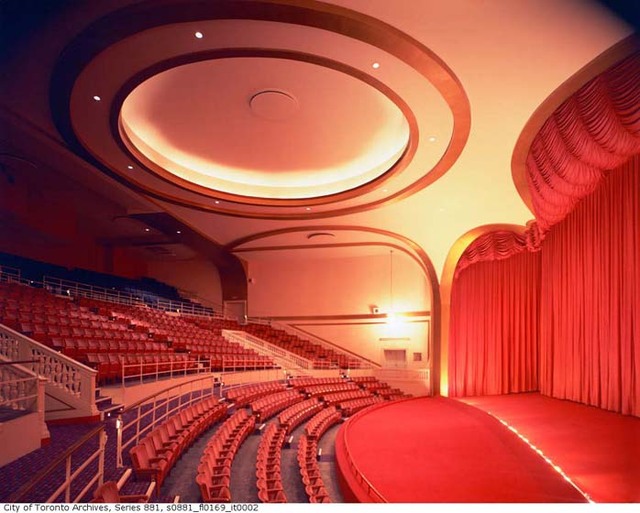
With an original seating capacity of 3,000, the Uptown Theatre was one of Toronto’s largest theatre’s. It opened September 18, 1920. It was equipped with a Warren3 Manual 14 ranks theatre pipe organ which was opened by organist Horace Lapp.
It was damaged by a fire in the 1960’s, which gutted the main auditorium. Following the fire, the theatre was rebuilt. The main auditorium reopened on December 25, 1969. Screens 2 & 3 opened on January 30, 1930 and the Backstage 1 & 2 opened on March 20, 1970. The Uptown Theatre continued to show movies until it was closed in September, 2003.
The theatre was demolished in December, 2003. During the demolition a crane hit a support beam in the auditorium and killed a civilian in a building next door and injured 14 other people.
Famous Players has announced that it will replace the Uptown Theatre with a ten-screen movie center across the street, which will be part of a condo-plus-retail complex at 1 Bloor St. E. planned by the development company Nastapoka.
Contributed by
Jason R
 Want to be emailed when a new comment is posted about this theater?
Just login to your account and subscribe to this theater.
Recent comments (view all 55 comments)
The decision to close the Uptown was probably more related to Real Estate assets rather than anything to do with Wheelchair Access.
If the story of the Uptown is anything like the Capitol 6 was in Vancouver, FP owned the property. Even in 2005 dollars, the property was worth tens of millions of dollars. Guess what replaced it? “ The Capitol Residences ”. Sound familiar?
The overly bloated figure of $700,000 ( maybe they got quotes from government contractors ) seems to be totally unrealistic, and used the whole fiasco as a vehicle to unload some prime Toronto real estate.
That’s my thoughts on the subject.
Ignore the troll. Here’s the story, I have worked for Famous Players (now Cineplex) since the late 1980’s. A human rights complaint was made at another downtown theatre for not being accessible, the ruling came down that cinemas had to be made accessible (including restrooms) and they had two years to do it. The cost was prohibitive in many theatres plus the Uptown was an expensive old theatre to keep operating so Famous closed all of their theatres that they owned and sold off the properties and once leases expired in locations that they leased they didn’t renew and closed them too. Other casualties of this era in downtown/uptown Toronto were the Plaza, Hollywood, Eglinton & Sheraton theatres. Their new “brand” theatres were built on properties with much better leasing terms and were much more efficient (read, profitable) to run. The Uptown was demolished despite an attempt to get it designated a heritage building but because there are two surviving examples of architect Thomas Lamb’s theatres in Toronto, The Ed Mirvish Theatre (formally Canon Theatre/Pantages Theatre/Imperial Six cinemas/Imperial Theatre) and the Elgin Wintergarden Theatres (formally the the Yonge theatre in the late 60’s/70’s early 80’s and before that, Loew’s Yonge Street theatre) so the heritage designation was not granted and was demolished to make way for a condominium development – the Uptown condos. The Uptown was a great place to see movies and a favorate for movie goers. Each year TIFF paid rental rates for the theatres they used during the film festival and theatre staff and management operated during the theatres along with an army of TIFF volunteers and paid festival reps. who pretty much took charge of all front-of-house operations.
“ Ignore the troll ”
Moi?
LaserboyTO is absolutely correct about the refusal of Famous Players to retrofit some of their older theatres for handicapped. It would have been cost prohibitive and these theatres were at the end of their commercial lives. They had built the Paramount just a few blocks to the south but what did the handicapped do— they went and protested and actually sued Famous Players over the uptown. The decision was made just to close these old theatres and that decision was the correct one! I worked for Famous Players 11 years and actually worked at the Uptown for a while!!
This entry needs to be updated to include the Uptown Backstage 1 & 2, two additional screens operating on the other side of the building, that opened on May 20th, 1970. I will add an advertisement for the opening to the photo section.
September 18th, 1920 grand opening ad in photo section.
Before the 2003 Toronto International Film Festival began, this theatre’s final movies were Pirates of the Caribbean: The Curse of the Black Pearl, Open Range, and Uptown Girls. By the time it closed, it had limited manual wheelchair access.
Condos rising on the Uptown site. Article with theatre photos below.
https://www.theglobeandmail.com/arts/film/article-best-old-movie-theatres-toronto/?utm_source=facebook.com&utm_medium=Referrer%3A%20Social%20Network%20%2F%20Media&utm_campaign=Shared%20Web%20Article%20Links&fbclid=IwAR3zRmRWbMEuKMpEZgIAwSfAo4QRmiBxPnnBN2heAfdmQphrgYInQyNMfqE
March 20th, 1970 ad:
Screen one reopened December 25th, 1969, Screens 2 & 3 opened January 30th, 1970, and Backstage 1 & 2 opened March 20th, 1970.